Blog
BlogWhat I’ve learned about consulting, comms, and trust
4 min read Written by: Chris Elias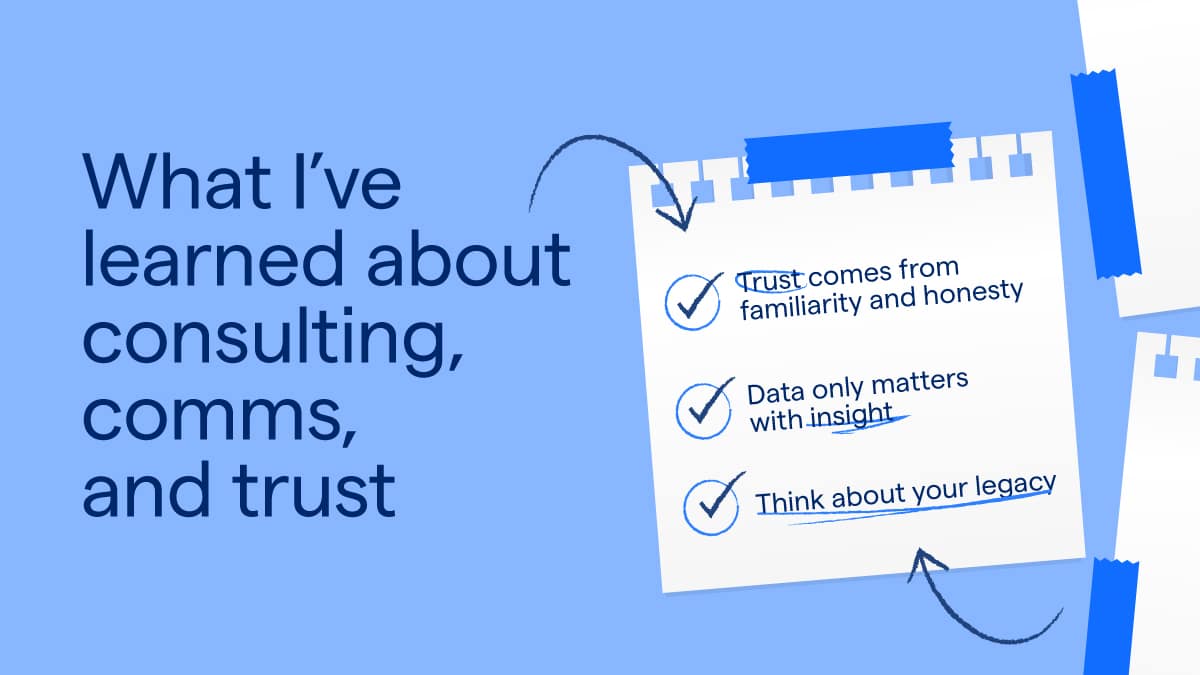
When people picture consultants, they often imagine experts swooping in, presenting a polished answer, and disappearing before the ink on the invoice dries. That’s not what we do at Perago, and it’s not what good consulting should look like.
To me, consulting isn’t about being the hero in the room. It’s about being the guide, the partner, sometimes the challenger. It’s about leaving teams stronger and more capable than when you first walked through the door.
After years in communications, I’ve built up a few lessons that now shape how I think about both people and change. They didn’t come from glossy decks or 100-page reports, but from conversations that shifted my perspective. Now, at Perago, they underpin how I approach what we call ethical consulting.
Three lessons that shaped my approach
- “Favourability and Familiarity Build Trust.”
Alun Shurmer at Welsh Water once said this to me, and it’s never left me: people are more likely to trust you if they both know you and like you.
During the pandemic, Welsh Water faced the challenge of keeping employees engaged and maintaining public confidence under huge scrutiny. We introduced live streaming, built a studio for leadership updates, and committed to being transparent—even when we didn’t have all the answers.
The result wasn’t slick spin. It was trust, built by being visible, open, and human. At Perago, we apply that same principle: bring people into the journey, don’t just hand them the final product.
- “Data Is Just a Burden Without Insight.”
Derek Hobbs at DVLA reframed my thinking about data with this line. Organisations often have no shortage of dashboards and reports—the real challenge is making sense of them.
I’ve seen teams drowning in numbers but struggling to act. At Perago, we help organisations cut through the noise, spot what matters, and turn information into something useful.
For me, the story isn’t “look at all this data we’ve gathered.” It’s “this is what the data tells us, what it means, and what we’re doing about it.” That’s how you build confidence, not with more charts, but with clearer decisions.
- “Think About Your Legacy, What Do You Want to Be Known For?”
Dominic Houlihan at the UK IPO asked me this more than once when we worked together, and it’s stuck with me ever since. It forces you to think beyond the project plan and ask: when this work is finished, what will be left behind?
I’ve carried that question into every role—setting up communications functions, leading rebrands, or building engagement frameworks—always trying to ensure they were sustainable.
At Perago, this is at the core of what we do. We don’t build dependency; we build capability. Our job isn’t to leave clients with a mountain of reports. It’s to leave them with the tools, skills, and confidence to keep going without us. That’s what we call ethical consulting.
What does ethical consulting looks like?
For us, it boils down to four principles:
- Honesty first. Tell the truth, even when it’s uncomfortable.
- People at the heart. Involve them early, listen properly, co-create change.
- Clarity over noise. Focus on what matters, not on jargon or vanity metrics.
- Capability, not dependency. Leave organisations stronger than when you arrived.
This is how we approach every communications project, from strategy design to delivery.
What does building capabilities look like?
On a recent project with a local authority, we knew their communications challenges wouldn’t disappear when we did. Instead of running a one-off campaign, we embedded ourselves in their team, running clinics, co-creating plans, sharing reusable tools.
The best moment? A comms officer told me:
“I feel like I could run this campaign on my own now; you’ve given me the confidence to try new approaches.”
That’s the point. Stronger, more confident teams. Not dependency, but capability.
Sharing knowledge, not hoarding it
Every template, every workflow, every lesson—we share it.
When we build campaigns or comms strategies for a public sector body, we don’t just hand over a PDF. We run workshops, share our thinking process with the team, and support implementation when needed. The result isn’t our campaign – it becomes their living, breathing tool.
The value of critical friend during transformation projects
Sometimes, the most valuable role we play is to ask the uncomfortable questions:
- “Why do you do it that way?”
- “What would happen if you didn’t?”
Being a critical friend isn’t about negativity; it’s about honesty. In one case, that meant pointing out where a communications strategy wasn’t aligned with organisational priorities. Once addressed, the revised strategy gained executive buy-in where earlier attempts had failed.
Why does trust matter in consulting?
The more I work in consulting and comms, the more I’m convinced of a few simple truths:
- Trust takes time. You can’t fake it.
- Data needs meaning. Otherwise, it clutters inboxes.
- Legacy is the measure. True success is leaving behind stronger teams and clearer systems.
At Perago, our standard for consulting is simple: every project should leave a positive mark, not just in outcomes, but in the skills and confidence of the people delivering them.
Because the best compliment we can get isn’t:
“That was a great campaign.”
It’s:
“We don’t need you anymore.”
Latest from the blog
The performance paradox: The technology trap, national capabilities and transformation
6 min read
The performance paradox: What the data really tells us about police reform
5 min read
Becoming a Skills for Planet Trainer: designing for Wales, people and planet
4 min read
Introducing the Perago Associate Network: good people, connected
4 min read