Blog
BlogA love letter to the incoming Welsh Government: what we said, and what comes next
6 min read Written by: Victoria Ford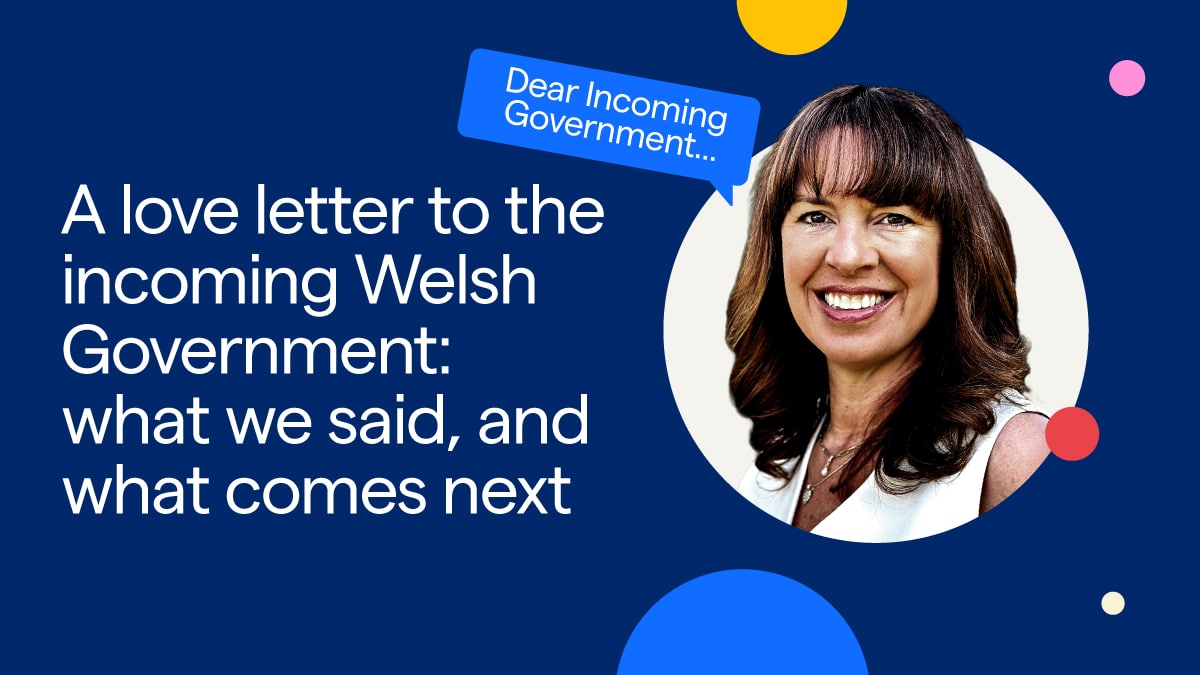
Today, Wales votes.
By the time most people read this, they will have already decided. The conversations that matter will have happened, and the arguments will have been made. What remains is the counting, and then the work.
This series started with a provocation. I called it a love letter, and I meant it, but I was honest from the outset that love, in this context, comes with impatience attached. Affection for what Wales is trying to be. Frustration at the gap between that ambition and the daily reality of the services people actually experience. And a genuine belief that the gap is closable.
Five people from the Perago team made that argument in five different places.
Tim looked at council tax. Twenty-two versions of the same operation, running across Wales, none of them designed with the whole journey in mind. A household in Caerphilly and a household in Ceredigion, both paying based on the same national policy, experiencing it entirely differently depending on postcode. The problem isn’t the policy. It’s the infrastructure underneath it, which nobody has been asked to look at as a whole system, end to end, at the same time.
Emma looked at the 30,000 people working in Welsh call centres and asked a question that almost nobody in economic policy is asking: what do these people actually know? Not the scripts, the real knowledge. How to hear distress before it’s named, where systems break down in practice, which situations need a human and which don’t. That knowledge was expensive to build and will be surprisingly easy to lose if we treat AI disruption as a cost problem rather than a knowhow problem.
Omar made the case for a Welsh Test, Learn and Grow programme. Wales has world-class policy ambition and a delivery infrastructure that hasn’t kept pace with it. England has a £100m programme that creates structured permission for teams to try things, learn, and feed that back into policy. Wales has no equivalent. Omar’s point isn’t that Wales should copy England. It’s that Wales, small, single jurisdiction, already committed to long-term thinking through the Well-being of Future Generations Act, is better placed than anywhere in the UK to build something better. If it chooses to.
Chris looked at Welsh teachers spending their Sundays on the administrative layer underneath a curriculum that is genuinely ambitious and genuinely worth the effort. The question he asked is the one the incoming government should be sitting with: are the conditions in place for AI tools built for Welsh education, by people who understand it from the inside, to actually reach Welsh classrooms?
Cory wrote about a woman in rural Wales, discharged from hospital, trying to make the 5pm bus home with her medication. Whether she makes it depends on a chain of decisions and system handoffs that nobody in the building has ever mapped end to end. Her argument is that Welsh health organisations are being asked to transform without first understanding where they are starting from. The foundational questions, how do our services actually work, do we have the right people and tools in the right places, keep getting deferred because there is always something more urgent. She is asking the incoming government to make foundational service design a condition of transformation funding. Not more ambition, the infrastructure to act on the ambition that already exists.
Four different topics. Five different voices. The same argument underneath all of them.
The series ends today, but the conversation doesn’t.
Once the new government is formed, whatever shape that takes, we intend to write to it. Not with a list of complaints and not with a polished set of proposals. With the same thing we’ve tried to offer here: specific, honest thinking from people who have been inside the delivery challenge and have something useful to contribute to what comes next.
We will also be direct about the fact that Perago has a stake in this. We are a Welsh business, based in Swansea, working across Welsh public services. When those services improve, it matters to us professionally and personally. We want to be part of what comes next, not as commentators, but as partners. We know how to do this work. We would like to do more of it, with a government that is ready to be serious about the gap between ambition and delivery.
That is not a pitch. It is an offer, made in the same spirit as everything else in this series.
Today, Wales votes. And when that government is formed, we’ll be ready for delivery.
Dear Incoming Government is a Perago series published in the run-up to the May 2026 Senedd elections. You can read the full series here.
Latest from the blog
Caerphilly’s £13.5m savings mark one year on from Perago-backed transformation programme
3 min read
Lantela’s diagnostic workshops: how do they work, and how to take part
3 min read
Sport Wales appoints Perago to lead service mapping project
5 min read
Launching Lantela: making sustainability work in practice
5 min read