Blog
NHS Wales stuck in a “doom loop” of escalation, warn Perago, former minister and ex-health board chief in new NHS Wales white paper
5 min read Written by: Victoria Ford
The health service in Wales is trapped in an endless cycle of escalation that managers cannot break, leading to demoralised staff and patients who can afford it turning to private healthcare, warns a new paper by people who have worked on the frontline of reform.
Former Hywel Dda chief executive Steve Moore and former Welsh Government Minister Lee Waters are urging Cabinet Minister for Health and Care, Mabon ap Gwynfor, to break the “doom loop” of escalation in NHS Wales and replace it with a practical plan for improvement, starting with waiting lists.
Their paper, From Escalation to Improvement, written with Welsh consultancy Perago, finds that every health board in Wales has been under Welsh Government escalation since September 2023. Betsi Cadwaladr has been escalated without a break since June 2015, more than eleven years. Meanwhile only one board, Cwm Taf Morgannwg, has taken a service all the way out of special measures and back to routine arrangements in more than a decade.
“Every board is escalated, everyone is reporting, and too little time is left for the hard work of improvement. You can’t fix everything at once. The answer is to fix the things that matter most first: waiting lists, fewer targets, and practical support to help services change,” said former health board chief Steve Moore.
The authors, who are offering the paper to the new Welsh Government at the start of its term, argue that a process designed to identify exceptional concerns has become routine.
Although the escalation regime evolved over more than a decade under previous governments, they believe the new Accountability and Support Framework (announced on 29 September) presents an opportunity to take a different approach. What was intended as an alert mechanism now absorbs the time, attention and energy of the very leaders and staff on whom improvement depends.
They warn the new approach will only break the cycle if every escalated organisation is given published, measurable exit criteria from the start, and real help to meet them.
Victoria Ford, Managing Director and Group CEO of Perago, said, “Big change starts small, with the people who do the work. But it only lasts if boards make improvement their main business, give teams, including clinicians, time to lead it and scrutinise whether it’s working. That’s what we’ve seen work in Welsh public services, and it’s what NHS Wales needs now.”
The paper also argues that money alone is not the answer. Wales spends more per head on health than any other UK nation, and revenue funding rose 4.5% in real terms in 2024/25. Yet health boards ended 2025/26 with a £199m deficit, and six of the seven missed their duty to break even. The authors say this points to how the work is organised, not just how much is spent.
“This proposal is deliberately practical. Its first steps don’t need legislation, a new funding settlement or another reorganisation. It means focusing the system on a small number of priorities, starting with waiting lists, and building the capability to improve,” former Welsh Government Minister Lee Waters said.
Waiting lists should be the first test of a new approach, the authors say, because they matter acutely to the public and can move within a single Senedd term. They want Wales to aim to be the fastest-improving nation in the UK on elective waiting times. After ten consecutive monthly falls, the number of patient pathways waiting, which counts some patients more than once, has risen every month since March, to just under 709,700 in July 2026.
Rather than running the programme from the centre, the authors propose building multidisciplinary teams around the problem. Consultants, theatre and booking staff, managers, analysts and patients would find what already works somewhere in Wales, test it in one place and then spread it across every board.
The authors also say none of this will work without stronger leadership, governance and culture on health boards. They call for improvement to be a standing item on every board agenda, simpler reporting, professional development for non-executive members so they can scrutinise improvement properly, and better use of consultants’ job plans to give clinicians time to lead change.
“Unless we get a grip on this quickly more and more people are going to migrate to the private sector,” former Minister Lee Waters warns. The paper notes that private healthcare spending is growing faster than any other part of UK health spending. “The numbers are still small, but they point to a slow unravelling of the social contract behind the NHS,” he added.
The paper’s main recommendations are:
- published, measurable exit criteria for every escalated organisation, agreed at the point of escalation
- early support from an improvement partner, replacing “enhanced monitoring”
- fewer than ten national performance measures, down from 53, with a single reporting channel
- improvement made a standing item on every health board agenda, with stronger scrutiny from non-executive members and time for improvement built into consultants’ job plans
- one national elective programme, led by health board chief executives and medical directors, making better use of existing theatre capacity before building new
- Betsi Cadwaladr, escalated for the longest, as the first test of the new approach to escalation, with the elective programme starting in the boards most ready for it . The authors warn against breaking up Betsi Cadwaladr, which they say may be politically attractive but is probably the worst option for tackling north Wales’ underlying problems.
They also argue that urgent and emergency care is a ten-year challenge that more beds and ambulances won’t solve, and that will need multi-year investment in community capacity. They call for reablement to become the default first response in home care, and for therapy-led and community models to be tested in Wales before they are rolled out.
You can view the white paper at perago.co.uk/nhs-wales-white-paper.
Latest from the blog
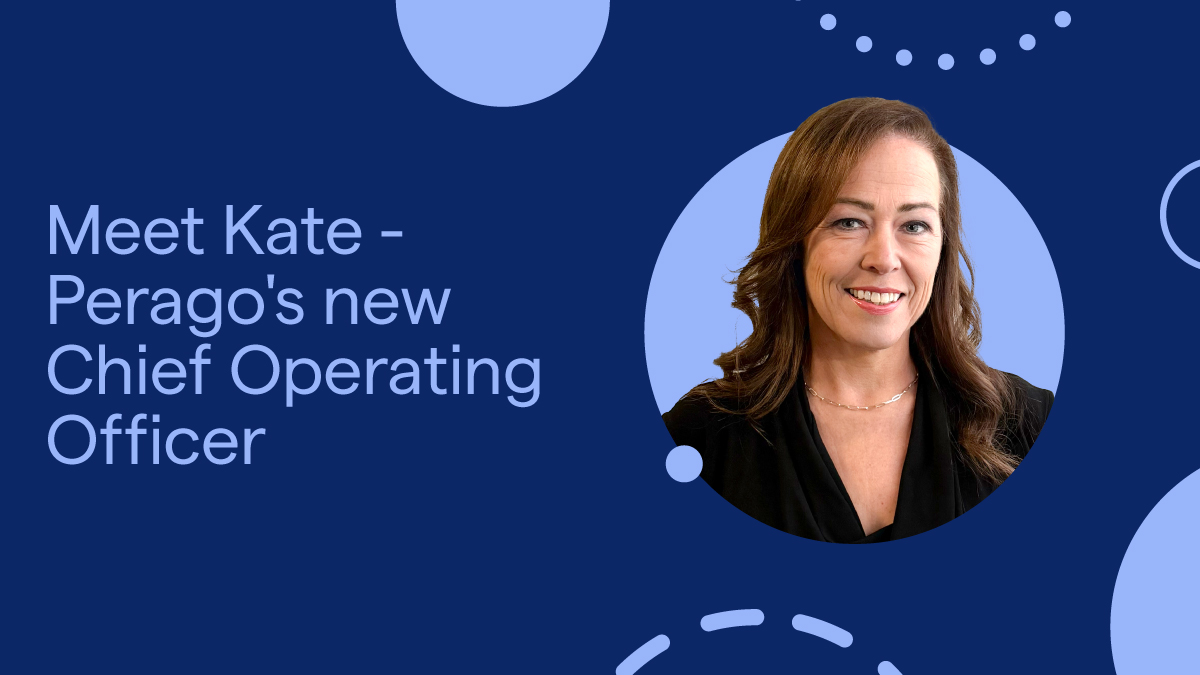
Perago appoints Kate Methuen-Ley as its first permanent Chief Operating Officer
5 min read
Make Yourself at UWTSD: how insight became identity, and a campaign found its voice
5 min read
Caerphilly’s £13.5m savings mark one year on from Perago-backed transformation programme
3 min read
Lantela’s diagnostic workshops: how do they work, and how to take part
3 min read